
The Best Splitting Axes in Canada
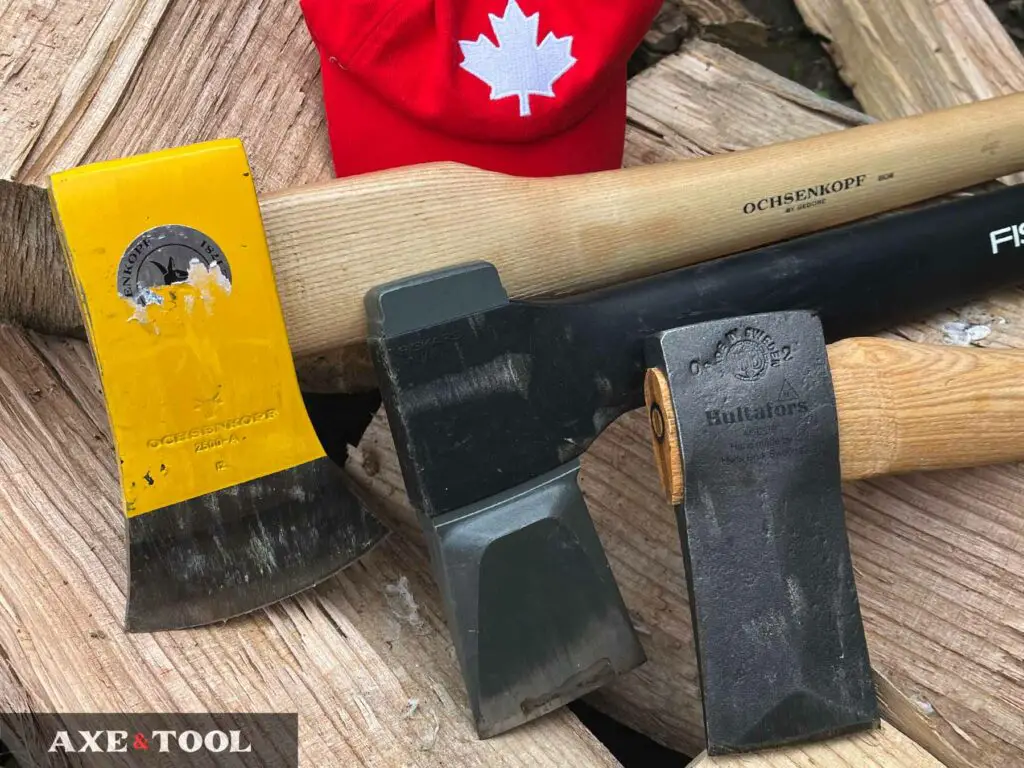
Unfortunately, there are no axes made in Canada today (outside of custom shops). So, the best splitting axes in Canada come from a selection of international makers.
There are a range of unique designs, sizes, and options to consider when getting a splitting axe. I own or have swing time with almost all the axes on this list, and have tried to break down the strengths and weaknesses I have experienced through hands-on experience.
This is just a hobby, but if you buy through a link I may get a commission that supports the site. Thanks!
Fiskars is Hard to Beat
Fiskars splitting axes perform really well and in my opinion, are the best “bang for your buck” on the market.
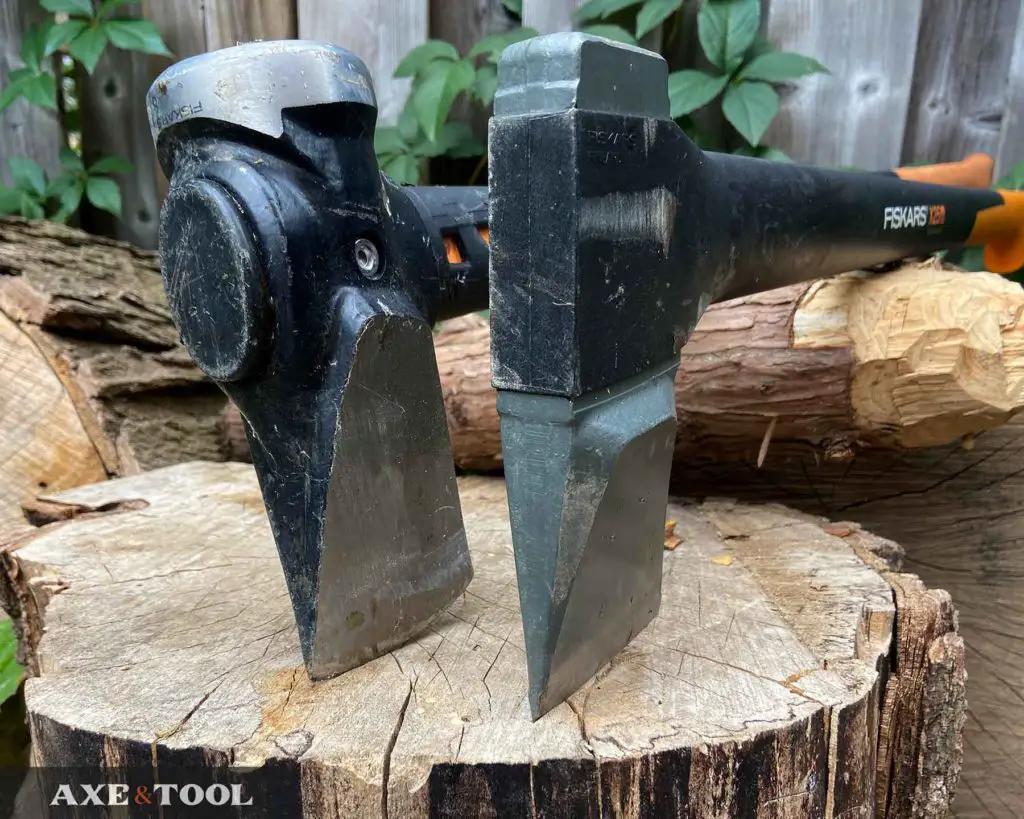
The flared head spreads the wood apart quickly and is tapered on the corners to help twist and pry stubborn wood apart. The blade begins as a thinner edge, which helps penetrate better and makes splitting smaller pieces easier without needing full-force swings.
This thin edge can be a little “sticky” if the log doesn’t split, but I find the trade-off worth it.
But besides performance, one of my favourite things about Fiskars axes is they need very little maintenance.
The composite handle is (mostly) indestructible. You don’t need to worry about overstrikes; you can use it to help pry apart stubborn wood. Rain and snow are non-issues, and it’s nice to throw the axe back in the garage and not care. You will likely get a little rust on the blade as the coating starts to wear off – but it doesn’t really matter.
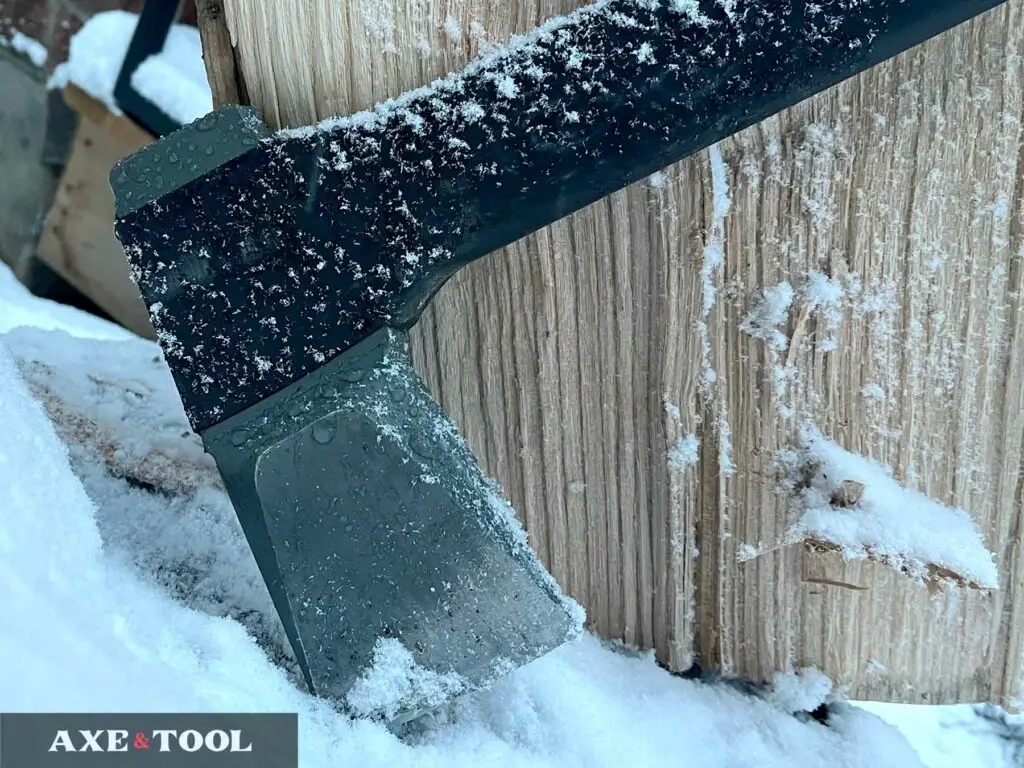
I have many nice axes with wooden handles that need oiling, proper storage, and more care to avoid hitting the handle – but none of that matters with Fiskars. They cost less, and they just work.
The Fiskars design also feels incredibly light and easy to carry around compared to some other models. The largest heads are 4 lbs, and the composite handles weigh almost nothing.
Which Fiskars Splitting Axe?
Fiskars offers a whopping 8 models of splitting axe, you can learn more about the different models and how to choose here (I own them all). I always choose the orange-handled versions over the all-black. The orange grip is rubberized and makes a surprisingly big difference in perceived vibrations in your hands.
My favourite combo is the X25 with the 8lb Maul for backup, but I recommend the incredibly popular full-size X27 as a primary splitting axe. See the X27 on Amazon, or you can find them at most hardware stores.
This is just a hobby, but if you buy through a link I may get a commission that supports the site. Thanks!
Ochsenkopf is a Heavy Hitter
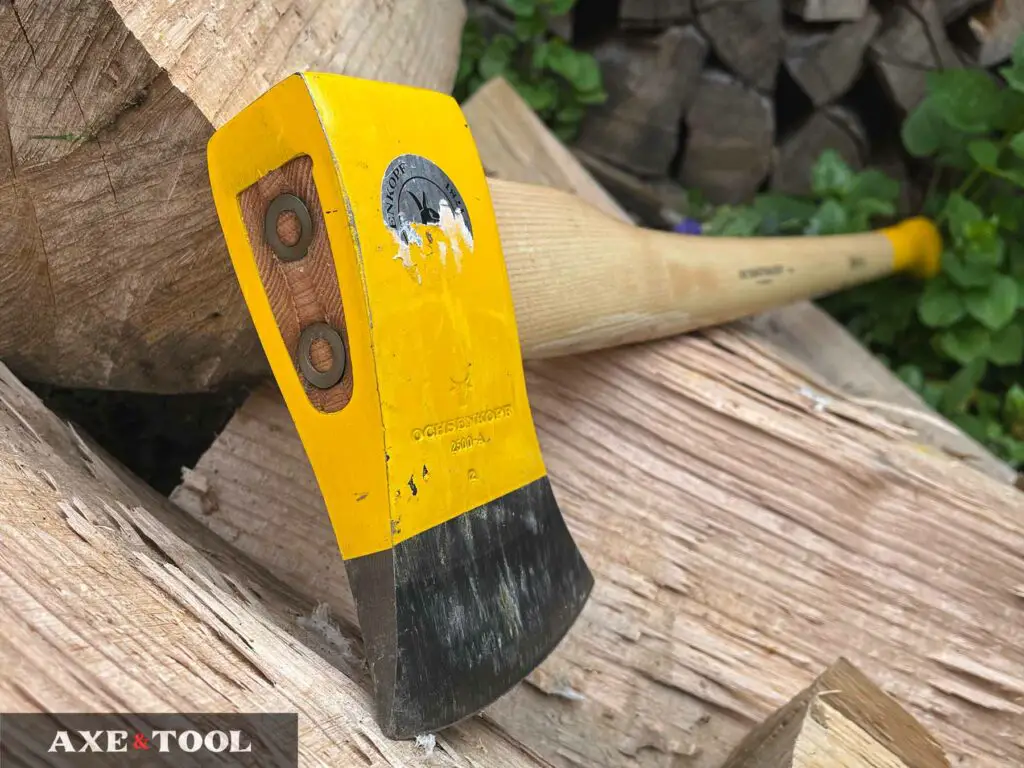
While there are other Ochsenkopf models out in the world, the Spalt-fix is the only one (seemingly) on the Canadian market. Lucky for us, it’s a heavy-duty, wood-handled splitting machine.
With a 6lbs head, the Spalt-Fix is heavier than many other splitting axes (and as heavy as some mauls). It doesn’t have any fancy ramps or bevels, it’s just a big, fat, heavy wedge that works.
On large logs, it delivers more one-hit splits than any other axe I’ve used. The fat wedge doesn’t get stuck, and the 31″ Ash handle is the perfect length. Long enough to gain power, but short enough to keep it more nimble and faster to use.
However, the handle is very fat, and covered in varnish (removing it is on my to-do list). This is less of an issue for a splitting axe but still is quite noticeable. And it only comes with a little pleather sheath, which is not great, but better than nothing.
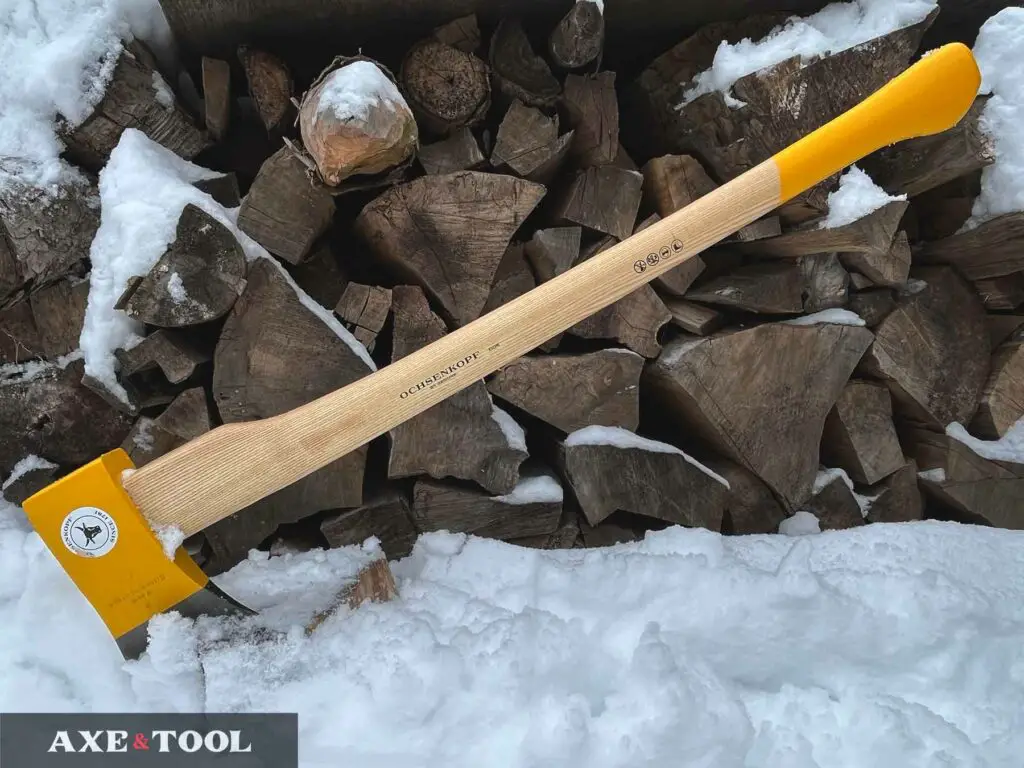
The downside of this axe is similar to that of a maul. The extra head weight that makes it so good for large logs, makes it cumbersome and less efficient for small ones. There is no way to use this axe on smaller pieces without it feeling like overkill.
But if you have a lot of large logs to split, I would take a good look at this axe – even over the Fiskars. The Splat-Fix is excellent and can be found at Lee Valley (no affiliation).
Stihl Splitting Axes are made by Ochsenkopf
Steel axes are just re-branded Ochsenkopfs – so if you have Stihl axes available to you they will be just as good. There is also a version of the splitter that has a metal overstrike guard available.
Gransfors Bruk is Heirloom Quality
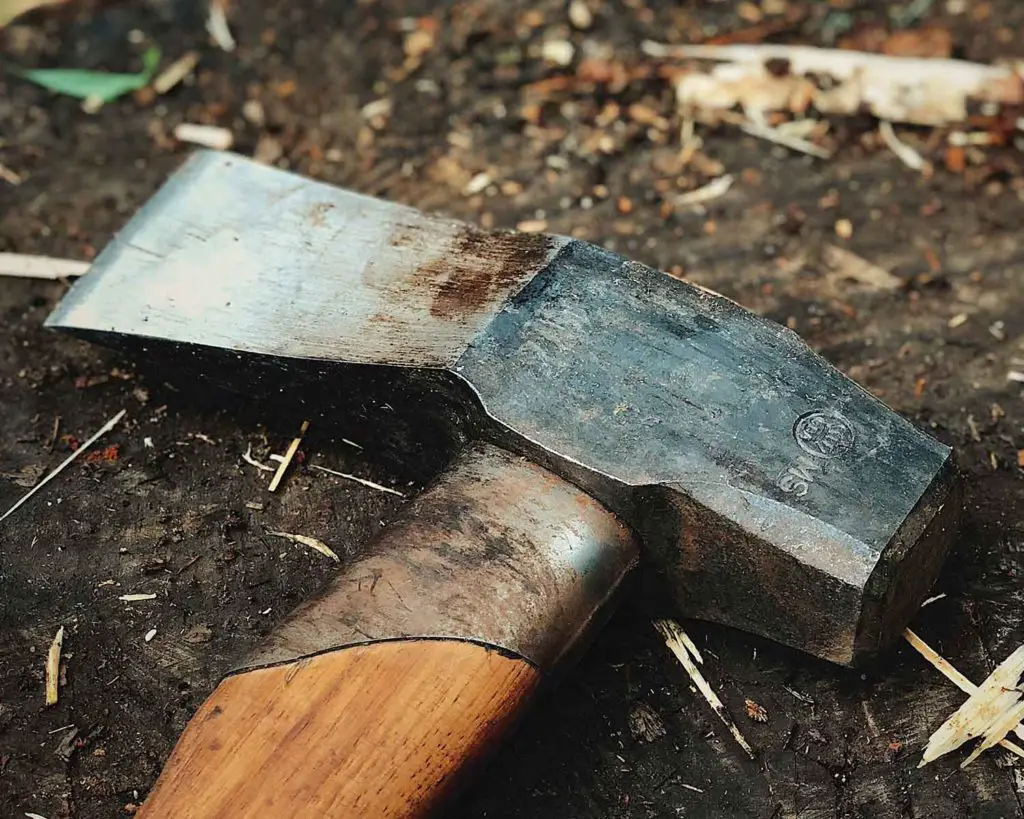
Gransfors Bruk are certainly the nicest (and most expensive) axes on this list. They are hand forged and assembled in Sweden, and the fit and finish are unparalleled by any other axe maker on this list.
I am a full believer in paying for heirloom quality tools like this – BUT, it’s important to understand what you are getting. These axes are great, but don’t expect just because they cost twice as much they will perform twice as well.
You are paying for craftsmanship, not performance.
The design of Gransfors Bruk splitting axes is similar to the Fiskars (performing in much the same way), with a flaring design that has a thin, sharp bit that ramps outward.
The steel is hard and holds a keen edge longer than the cheaper axes, and the Hickory handle is waxed, and comes with a metal collar to protect from over-strikes. They also come with a nice light leather sheath.
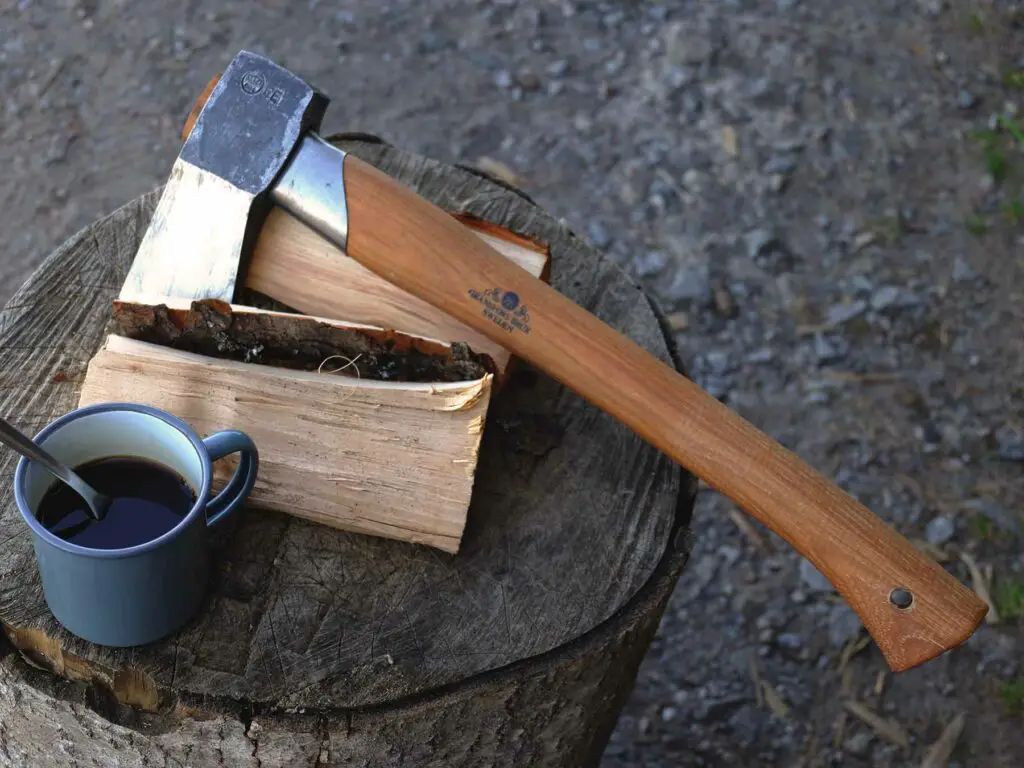
There is a little extra work to keep these heirloom quality tools well-oiled and clean – but that is part of the fun.
Which Model of Gransfors Splitting Axe?
The Gransfors Bruk splitting axes are a little lighter than the other axes on this list. The large models only have a 3.5 lb head and can come with either a 27″ curved handle or a 31″ straight handle. This means they may struggle a little more on really big logs but are still well suited to the woodpile.
The Gransfors maul is lighter than most mauls and even some splitting axes with a 5.5 lb head. To me, this brings it into consideration as a primary splitting axe and would be my choice. The maul also has a hardened poll, so it can be used to hammer wedges.
Available at:
Canadian Outdoor Equipment Co. (My choice)
Lee Valley
(I have no affiliation with these stores)
Adler High-Value German Design
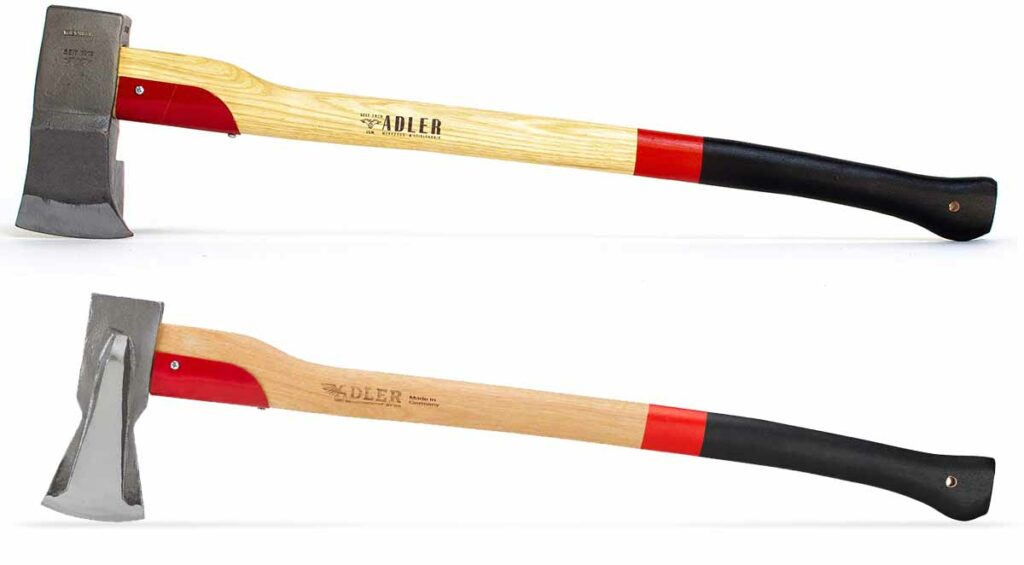
Adler axes are made in Germany, I believe by the same factory that makes the much more expensive Helko Work axes. They are well-made with good steel, and nice hickory handles, and come with decent leather sheaths.
Overall fit and finish is nicer than the Ochsenkopf, but not as nice as the Gransfors – and the price reflects that as well (a little more money than the first, and a fair amount less than the second).
Adler is a little harder to find in Canada, but they have a good reputation and the quality level you get for the price is good value in my books.
The Super splitter is heavy duty, with a 6.2lb head, with another big wedge design. However, it has a distinct point at the bottom of the blade that allows you to use it to help move and position logs (a neat feature it has over the oxhead).
The German Splitter uses an iconic German pattern that is quite popular today that (although it’s not my favourite), that works well in most scenarios. The head is 4 lbs which makes it easier to swing for extended periods.
They are available at the Arborist Store
(no affiliate and I have not purchased from them before)
Husky’s (Cheap) Super Splitter
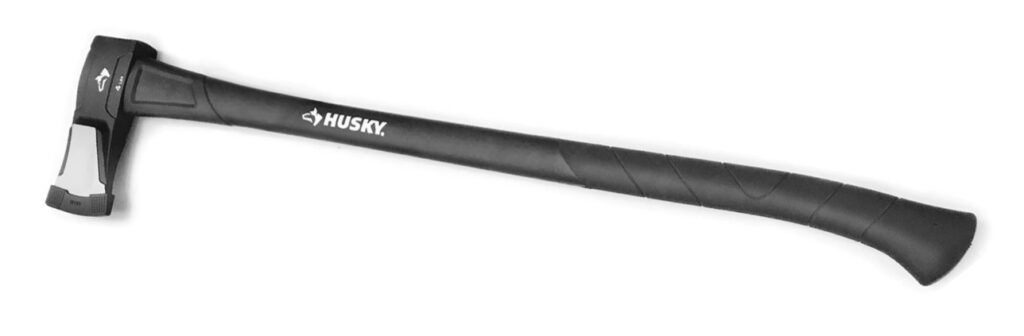
Husky is the cheap “owned brand” of Home Depot.
If you want a cheap splitting axe – this is the one I would get. It has a similar flared design as the Fiskars, with a similar weight, and a 34″ Handle (which I like more than 36″). It will not be as durable, come as sharp, or be made with the same level of materials – but the design is sound.
The handle is a more traditional fiberglass design, so it won’t be as strong or reduce the vibrations as much as a Fiskars. But it will still have all the same low-maintenance benefits.
Here is the listing on their website (no affiliation).
Additional Options
These aren’t even bad axes (I am not bothering to write about bad axes). Just axes that need additional consideration, or have limitations.
Hultafors Swedish Splitting Axes
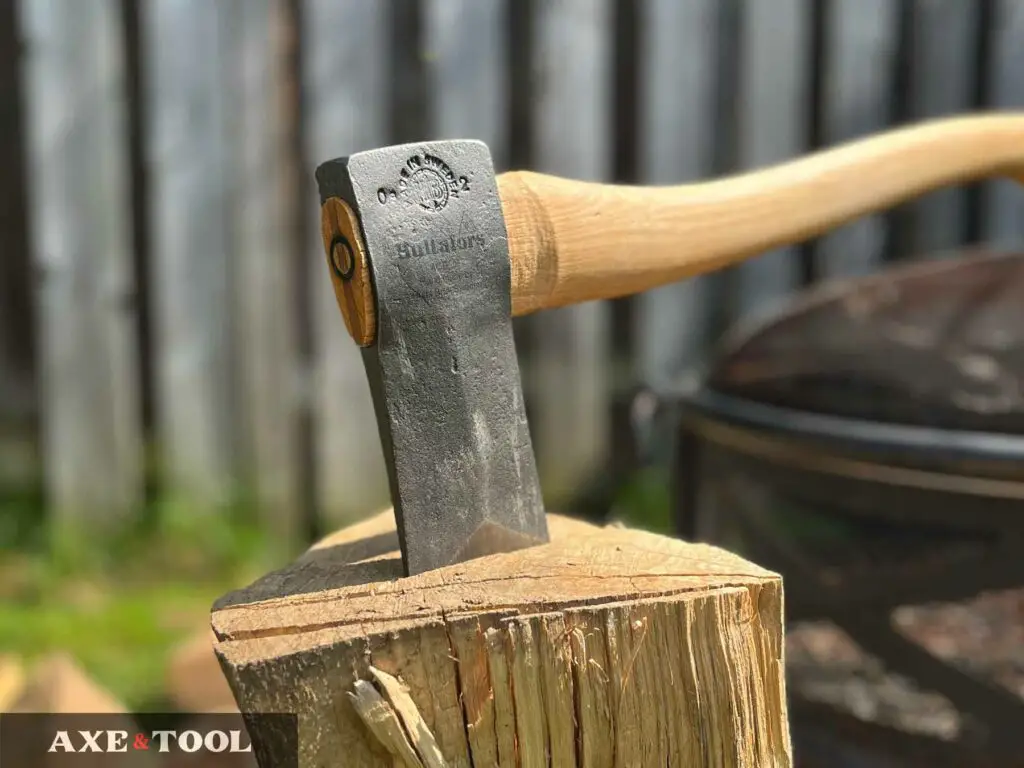
I hate putting this brand down here, as they are one of my favourite axe makers. However, the head design of the Swedish splitting axes takes some getting used to and is not always a great fit for big Canadian trees.
The head design is a long diamond pattern, which is well suited for small to mid-size softwood trees (similar to that of Sweden), but struggles on larger and harder types of wood. Beyond that, the geometry is just different than a typical North American axe and takes getting used to.
I have had some days where it works fine for me, but more often than not I don’t swing these as confidently as other designs.
Husqvarna Splitting Axes
Husqvarna uses the same designs as Hultafors, as they were made by Hultafors for a long time. I have seen some evidence they are now made by Prandi (Italy), but the design remains the same.
Garant Splitting Axes
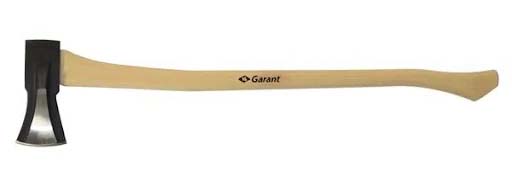
The axes themselves are fine. I actually really like Garant handles (even though they are fat and varnished). My only issue is the price. The last time I looked they were like $90 from Canadian Tire, which is crazy.
The heads are made in China and handles in Mexico. So $50 sure, but $90 – forget it.
Please comment below If I missed something or if you have any questions. I do my best to respond to everyone.
About the author:

About the author:
Jim Bell | Site Creator
I’m just a guy who likes axes. I got tired of only finding crap websites, so I set out to build a better one myself.
I’m also on Instagram: @axeandtool

Any thoughts on Council Tools 6lb or even the 8lb mauls?
I just put my 6lb Council Tool maul through a couple cords of mixed Canadian pine and fir. I found it to be quite the processor, easy on the hands too. May be worth a look!
I really enjoy your website by the way, keep up the good work.
I haven’t had a chance to try the Council Tool Maul, but maybe I will have to try and find one. I have a couple other axes of theirs which have impressed me, so I’m not surprised you have had good results.
They don’t seem very common up here – although I see Lee Valley has started carrying the 6lb. I also want to get my hands on the 5lb splitting axe as well.
Thanks for comment!
Yeah same here (BC), mostly just run of the mill crap, I ordered mine from Lee Valley, which I’ve had good experiences with.
I didn’t know that Council Tool had a 5lb splitter, that cues some intrigue, I may have to seek one out.
I don’t think the 5lb splitter is in Canada (yet), but it has been around in the USA for a couple years. Looks really well designed. But we are stuck day dreaming about it up here (I’m in Ontario).
Idk what your thoughts on Amazon are, (or if they charge extra for shipping to Canada); but they have a TON of different Council Tools products.
Also; I have found axes on Walmart.com, (and have bought a couple), with prices far cheaper than Amazon. I would check both.
Hey John! I have bought axes of Amazon, If it’s a reputable brand like Council Tool I don’t worry too much. I’m assuming you are in the US, but the Canadian Amazon has less options, and the options from the US do have import charges that tend to remove any potential savings (usually not worth it by the end in my opinion). And the Canadian Walmart is even worse, I don’t think I have ever found an axe worth buying there.
But I appreciate the tip, it’s good to know for when other people ask. I never would have thought Walmart because of my own lack of luck.
Side note – I was just out playing with Fiskars mini-maul again, thought I would give it another go… Still hate it, lol.
Thanks for another great comment.
Your last sentence about the mini maul made me literally bust out laughing. I hate mine too.
ALSO; I haven’t yet found much use for my X5. I have an X7; and for what I do; it is barely useful. Although I always have it with me; and when the pieces are just a little too big for my liking; I reach for the X7.
Side note: I would like to see reviews on pickeroon/hookaroon.
I am ordering a Forester pickaroon this month from Walmart online. If my Social Security hits the credit union tomorrow; I will place the order.
HOWEVER; I still haven’t decided on whether to get a 28″, or a 36″.
I am on the Wisconsin/Illinois border. In Wisconsin thank God.
I love my X5 for backpacking, but that’s really it. As for the pickeroon, I have 0 experience and likely won’t any time soon. I don’t really go through enough wood to justify it. But also when I have money in the axe budget, I usually “justify” buying stuff I think is cool that I need even less. Let me know what size you end up going with.
VERY interesting about the pickaroon! I found a 28″ Forester pickaroon at my local home goods store; that was marketed with the store’s own brand name; Yardworks, for 19.99!
They had three of them. I didn’t think to check that they might have their own “personality”…
The FIRST one I got; the head started to come off, so I took it back to exchange it. The head started to come off on the second one; so I called the store; and asked to speak to the manager…
I reasoned with him that he should just give me a couple of wedges; and I would fix the one I had, as the last one there would probably do the same thing.
I had my neighbor hold the pickaroon upright on the concrete driveway, while I held the wedge with a needle nose pliers; and drove a couple of wedges in with a ball pein hammer.
NOW; about the personalities: my neighbor decided HE wanted one. So he went to the store and bought the last one.
He brought it over to try it out on my woodpile. I noticed that he seemed to have to exert less effort to get it to stick…sure enough! The taper of his point was noticeably narrower! Which resulted in considerably less effort required to sink the head into a log.
So now I have to grind away some of the metal on mine to get it to work better…
Sorry for the long winded reply, BUT….
I couldn’t help myself; I ordered a Fiskars “Hookaroon” they seem to use the names interchangeably.
The Fiskars uses a “blade” instead of a “head”; and WOW what a difference! Very little effort required to get a decent “stick” with the Fiskars. Hands down!
It was 51.00 from Amazon here in Wisconsin.
I found it an interesting experiment; and have used my Fiskars Hookaroon every day since I got it. It makes lifting or moving large pieces of wood ever so much easier. Now I wouldn’t want to be without one!